
This article is most focus on ways that you can improve your ability to communicate with clients and learn from their feedback on services you provide as you improve your career as a freelancer

Find what you're really good at
I’ve been a software developer since college but never really truly embraced it as something that could bring out full-time income until about 2 years ago.

It’s normal to feel scared. I certainly did not make my decision overnight. In fact, I only handed in my resignation after I received my fourth fortnightly paycheck from a website designing work I just got into. “Why do I say this! its because most for us focus more on registration on the Brand without really knowing our customer base ”
Figure Out Your Services
The great thing about freelancing is that you don’t have to look any further to figure out what service to provide your future clients.

When I started out freelancing, I just marketed my love for writing code and Graphics Design and started making money out of it.
Note that I never had any professional background in Software development (I was still in college) and the only experience I had was from a final year project in college.
Start with what you know
You can start with the work that you are currently doing in your 2-to-5 years. Maybe it’s Graphics, Photography, Architecture, Civil engineering, Hair Dressing, Makeup Artist, programming, design… there is basically no end to the type of services you can offer!
Upgrade your skills
Eventually, you’ll want to explore other areas that complement the services that you offer or move to an entirely different area. With freelancing, you take charge of your career and your business so whatever direction you choose is totally up to you!

It’s also possible that the type of service that you currently offer is not as lucrative as the others — that’s also a sign that you might want to upgrade your skills and explore other areas. Obviously, Check out what others are doing in the industry that your in and work on improving your business and services that your current offering and always listen to customers feedback.
Some online resource I highly recommend:
- Udemy for online courses
- Medium for articles and useful information
- Instagram for creative inspiration
Start Marketing Your Services
Perhaps one of the biggest reasons why so many people are scared of making the switch from employment to freelancing or just to start working for themselves is because you are left to fend for yourself.

There will be no upper management to look for clients on your behalf and you also have to do a lot of admin work such as answering to client emails, sending invoices and following up on overdue payments, and taking care of your finances. But that also makes things more exciting!
Now, how do you market your services? Below are some places to help get you started:
1. Your personal network
Try to look around if friends and family — or anyone they know — are looking for the types of services that you offer. I’ve had some success getting design gigs(Logos, Websites) from my personal circle of classmates/freelancing friends.
2. Job marketplaces
I currently use Upwork/Social media (Instagram Ads, Facebook Ads) for my own freelance business but you can also explore other sites such as FreeeUp, Freelancer.com, Fiverr, OnlineJobs.ph and so many others. These places may be littered with spammers though so you just have to be careful (if they ask you to pay first before starting work, it’s likely a scam). Also take note that these sites usually take up a percentage of your income so include that when calculating your rates.
3. Facebook groups
I’ve had a lot of success in getting clients in FB groups where my ideal clients hang out. In some cases, these people were upfront about looking for a freelancer to help them out; but there were also cases when I was just genuinely helping them on a question — and then they decided to get in touch with me to learn more about my paid services.
4. Cold pitching
This strategy can be a little intimidating especially for those who are just starting out. Cold pitching involves reaching out to a potential client who doesn’t know you, offering to help their business with the services that you offer.
5. Referrals
Eventually, you’ll have a big enough client network that can generate you, additional clients, on autopilot. I usually encourage my current clients to spread the word about my services in exchange for a free hour or 10% off their next invoice.
Build Your Portfolio
you might be wondering, how does one build a portfolio when they’ve acquired no relevant experience?
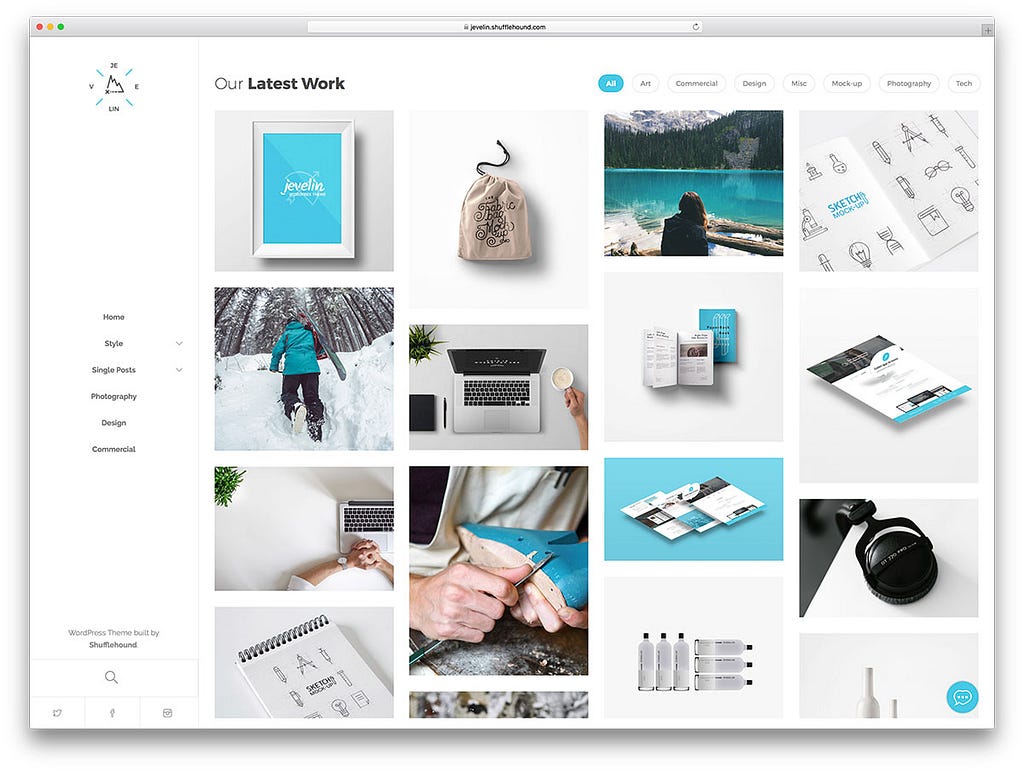
I started with a blog and it provided me with some of my best returns of all time. Given that my ideal clients are local business owners, it’s natural that I am required a working knowledge of running websites (particularly WordPress) as well as digital marketing.
So what to do next?
1. Build a portfolio site.
You can always create a free WordPress blog here. However, if you want to go a little more professional — and maybe explore using Divi on the side — I suggest using Portfolio PH. (This service is fairly new but run by my former colleagues who have been taking care of the hosting and domain of a majority of my websites since 2016.)
You can get a professional-looking website and showcase your work there, but you can also opt for an upgraded version for more advanced customization. Or you can also go the self-hosted route and install WordPress yourself if that’s something you’re up for.
2. Optimize your social media profiles.
Now that you’ve decided to enter the digital marketplace, it’s time to clean up after your digital mess. Transform your social media profiles into professional portals: update your profile picture, hide those embarrassing photos and update your privacy settings. Most importantly, make sure that you announce to the whole world that you are a freelancer for hire.
3. Optimize your profile in job marketplaces.
It can be a struggle to build your online portfolio in marketplaces based on feedback and previous projects. If you have none to showcase yet, you can start introducing yourself and describing what results you can provide your clients. It can be something as simple as reducing the amount of time your clients have to spend on their businesses because you can take care of the admin or the tech work on their behalf.
4. Ask for testimonials.
Once you start getting the ball rolling, don’t forget to ask for testimonials from your clients. I once had a client tell me how much she liked my Upwork profile and that social proof truly works. I have my best testimonials prominently displayed on top of my description section before I go on and introduce myself to my potential client. In Upwork, positive feedback also helps raise your Job Success Score (JSS) so you can become a Top-Rated Freelancer.
5. Always be learning.
Don't stop learning. Social media profiles aren’t just for stating the things that you can do for your client — you can use it to SHOW exactly the services and results that you can provide. For example, if you offer social media management services, use your social media accounts is a training ground to learn how to increase followers, reach goals, engaging, and so on. It can also be a way to showcase your design or copywriting work or you can even use a Facebook page to practice developing chatbots. Be creative!
Pro Tip: It’s totally okay to offer your services for free (an hour or two) or at a discounted rate if it means getting the experience and testimonial that you need to get started. I once offered a client 30% off her next invoice so I could get inside a particularly intimidating email platform that I couldn’t try otherwise.
Myths About Running a Freelance Business
A lot of people I know are extremely interested in becoming a freelancer and working from home but they get intimidated and held back by fear brought by common myths which are untrue

I used to believe that running a freelancing business wasn’t my thing or that it’d take a long time for me to achieve the kind of success I wanted.
Truth be told, it did take me more than two years to crack the code, and even then every single day continued to be a learning experience for me. While it’s true that you call the shots, on who you work with and how many clients you want to take on, Remember that you’ll end up answering your clients if you end up have more clients then you can handle.
1. You can become your own boss
Yes — and no.
While you do call the shots on who you work with and how many clients you want to take on, you still end up answering to your clients.
Once you enter a contract with them, it is your responsibility to provide them with the best services you possibly can but, within the limits of your contract and capabilities.
Learn to set boundaries right from the start to avoid client work from creeping into your weekends and personal time.
2. You can earn more money
Yes, it is totally possible.
However, it is also important to remember that, like everything in life, this doesn’t happen overnight. You need to be able to prove your worth in order for your present and future clients to trust you.
It takes a lot of hard work and dedication to get to your ideal rates.
It took me a year to raise my rates from Tsh 25000 for a logo to Tsh 50000. However, I was stuck at charging just Tsh 35000 at most for more than two years!
3. You can end up broke
Not really. But that is only if you know how to charge your worth and your finances.
In the beginning, I struggled to make ends meet because
a: I was paid very little and,
b: I was the sole earner from family and friends.
However, when things started to click, I was able to get a better handle of my business and was able to charge more for my services.
I ended up being able to pay some of my debt, move to our new house, purchase a high-end laptop, celebrate birthdays, travel and go on staycations, and finance a mini-renovation at home.
4. You can work for fewer hours
Here’s the truth: the past two years or so, I’ve been working up to 12–18 hours a day but this allows me to focus on ways to improve my services and learn more by a look at the competition so as to understand the market and people’s needs.
Crazy, right?
Still, I’m constantly in front of the laptop because I have to work ON my business including:
- finding leads and potential clients
- sending pitches, proposals and contracts
- scheduling discovery calls and client meetings
- working on my website and figuring out a better system for my business
- and many more!
5. Only those with special skills can make it
A lot of people think that you need special skills in order to make it big as a freelancer. You totally do not.
Yes, I may have had a tech background from college or I’ve been writing codes since I started using a computer, But we all have to start somewhere
I wasn’t always good at tech. In fact, I don’t even offer Mobile Apps development services because I have no professional experience (my background was in C programming, PHP, HTML 🤣🤣🤣🤣🤣🤣which I think is nearly useless for mobile development).
When I started working with Lockwood Team, I only highlighted in my pitch that I was tech-ninja and I could do the task given (this is a slightly dangerous path to take but let’s talk about it in some other post).
Originally published on Medium. This is the author’s website edition.